Tag Archives: poetry

In Memoriam Wendy Battin

A memorial was held this week at Mercy by the Sea in Connecticut for my friend, poet Wendy Battin, who died too young this past December. Our mutual friend Pat Valdata was one of several who spoke about Wendy’s life and work. She kindly included the words below in her address, a small tribute to a fine poet and friend:

In the fall of 1997, Canadian writer Mary Lee Bragg and her husband Colin Morton house sat for Wendy and Charles when they went to Greece for the fall term. Mary Lee writes:

“That fall was absolutely magical for me. … Working in Wendy’s space, sitting in her chair, guarding her collection of drums, reading her books, sleeping in her bed, cooking in her kitchen – I feel as if I knew Wendy better than almost anyone else in my life. And what I “knew” is impossible to summarize. …In two decades of knowing Wendy we spent very little time together. I was in awe of Wendy’s intelligence, and the breadth of her knowledge. Through her posts to crew, I enjoyed her wit, her keen observations of people, and her mastery of language.”

Colin Morton:

“I marveled at the intensity of her dedication to her writing and her pursuit of clear, lustrous language. Even her late notes on the losses that seemed to shut down her possibilities often possessed a terrible beauty her readers recognized as fine poetry. We are going to miss having her voice in our lives, reminding us of what it is possible to dream.”

VerseFest, March 15 – 20 in Ottawa

VerseFest, Ottawa’s annual festival of poetry from around the world, will be back next in March  for its sixth year. The reading series I co-direct, Tree, will be sponsoring narrative poets Caroline Pignat and Pamela Mordecai on Wednesday, March 16. Then on Sunday the 20th, I will be reading as part of the Ottawa Showcase feature. The rest of the program features poetry in English, French and English translation from all over, including appearances by Joseph Komunyaka of the U.S. and Canada’s poet laureate George Elliott Clarke and this year’s Governor-General’s Award winner Robyn Sarah.

The full program is here – http://versefest.ca/year/2016/ – and here are some details about my own reading:

Author most recently of Winds and Strings (BuschekBooks), Ottawa poet Colin Morton has published more than ten books, ranging from visual and sound poetry to historical narratives, sometimes all in the same collection. His other work includes a novel, an animated film, many reviews, and collaborations with artists and writers. Twice winner of the Archibald Lampman Award for poetry, he is co-director of Ottawa’s Tree Reading Series. Visit his website at colinmorton.net

Ottawater launches

http://www.ottawater.com/

Saturday, Feb. 6, 7:30 at Ottawa’s Carlton Tavern, several contributors to rob mclennan’s annual poetic and artistic showcase of national capital-related talent,  http://www.ottawater.com/

I’ll be among the readers. Ottawater’s always-elegant design isn’t quite ready yet, but a whole decades’ archive of previous volumes can still be read at the site.

Two recent anthologies

Some of my writing can be found in recent anthologies, along with that of many other poets. I Found It at the Moviesedited by Ruth Roach Pierson and published by Guernica Editions, includes Margaret Atwood writing about “Werewolf Movies,” Karen Solie’s “Love Poem for a Private Dick,” and Sharon Olds on “The Death of Marilyn Monroe.” as well as more high-brow fare like A. F. Moritz on a “Film in an Unknown Tongue” and Phil Hall’s homage to avant-garde filmmaker Stan Brakhage. My piece is a small love story called “Hiroshima. Mon Amour.”IFoundItAtTheMovies cove

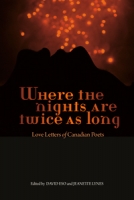
Where the Nights are 2xWhere the Nights Are Twice as Long: Love Letters of Canadian Poets is an unusual collection that includes not only love poems but the actual letters written by, for example, a lovesick Robert Service, an angry Irving Layton, and an aging Earle Birney. My letters, written when I was 23, show an immature young fellow intent on becoming a poet. A unique feature of this anthology from Goose Lane Editions, edited by David Eso and Jeanette Lynes, is that they are arranged by the age of the writer. So on page 27 you can read 19-year-old Gwendolyn MacEwan’s responses to the advances of 42-year-old Milton Acorn, whose letter is on page 202. You can skip around, of course, but if you read straight through, you can feel the arc of a life, but the hot and bothered 20’s, through the disillusioned 40’s to the peace and reconciliation of old age.