Twenty Poems that Could Save America and other essays, by Tony Hoagland. Graywolf Press. 2014.
Don’t be misled by the title. The author doesn’t make unrealistic claims for the power of poetry to save, nor is it exclusively for or about Americans. Among the poems unpacked in these entertaining essays are ones by Yehuda Amicha, Ann Carson, Tomas Tranströmer, Jean Follain, Eavan Boland. While the title essay appeared on Harper’s online and others were published in journals like Poetry, Kenyon Review and American Poetry Review, they combine to give a coherent overview of current writing practice. The book could even serve as a textbook for an advanced poetry course.
Hoagland celebrates the eclectic idiomatic exuberance of the English language, explores modernist and post-modern strategies for poetic form and structure, and revisits the appeal and pitfalls of populist poetics from Ferlinghetti to Dean Young. His critical insights are especially instructive when considering the contemporary “composite” poem, whose disjunctive lines risk randomness and lack of focus:
“Concise dramatic shape is important, even in “loose” associative poems, because poems are pressurized containers. A poem must contain energy, that is, hold it in … Let us liken a poem to an internal combustion engine. It is mounted, or housed, inside a sturdy frame. The structure must be sturdy because the contents of the poem are combustive; the vibrations are fierce.”
Hoagland goes on to show the sturdy “housing” of disjunctive poems by Carson, Tranströmer and others, and contrasts these with less successful, because random, poems that seem outwardly similar. And while directing attention especially to such strategies, Hoagland shuns the prescriptive:
“The idea that there is some historical aesthetic march of “progress” in literary forms is silly. A contemporary poem can as brilliantly succeed in a narrative mode, a confessional mode, or as a villanelle … Nonetheless, as artists, we are seekers, seekers of technical discovery as well as of vision … thus we are never really indifferent about the possibility of new poetic structural forms, because we are always on a quest for greater expressive power.”
Hoagland’s sympathies, though, are most often with the writers he calls “wisdom poets” such as Lucille Clifton, Jane Kenyon, Sharon Olds, William Stafford, Galway Kinnell, Linda Gregg – poets who
“aren’t taught in many MFA programs; such poems aren’t, perhaps, viewed as difficult enough to need smart people to explain them. Against a post-modern background, the sincerity of such poets must seem, well, simplistic.”
The title essay addresses the failure of American schools to bring contemporary poetry into the classroom and thus into the broader cultural conversation. It’s a failure that, despite some exceptional teachers and the League’s Poets-in-the-Schools program, can no doubt be seen in Canadian classrooms too. There’s nothing wrong with teaching old chestnuts like “The Road Not Taken” and “Do Not Go Gentle,” but to stop there is leave students with the impression that poetry is dead and unengaged with today’s cultural issues. Worse, it is to leave the field to a celebrity culture that cheapens and trivializes.
Hoagland’s twenty recommended poems do tend toward the “improving” sort, and they include ones we might consider chestnuts like “Traveling through the Dark” and “When I Heard the Learn’d Astronomer.” But his selection makes room for play and irreverence. It emphasizes poetry’s “populist brilliance and range. It can be high and low, entertaining, erudite, provocative, rude, brainy, and mysterious.”
Overall, these essays combat the general public’s prejudice or impression that poetry is stodgy and elitist. The saving of America is a tall order, even for Walt Whitman, but the light Tony Hoagland casts on our generation’s poetry illuminates some key features of the landscape for readers and writers alike.
– Colin Morton


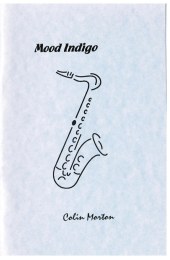 Another chapter from Rob McLennan’s historical review of literary presses in our town, Ottawa. This one is about the micropress I started to make chapbooks for friends:
 Recently,
 Here you can find out about poet and writer Colin Morton, read excerpts from his
  Colin Morton